


Intellectual Property Copyright & Registrations.
Here is a very simple, high school students’ guide to the legal and ethical landscape for creatives (designers, artists, musicians and authors. The term 'legal' refers to laws that protect creative work and that people in the creative industries have to abide by. 'Ethical' refers to obligations people have, as honest and responsible members of society.
Takeaways

Good to go
IP Copyright & Registrations
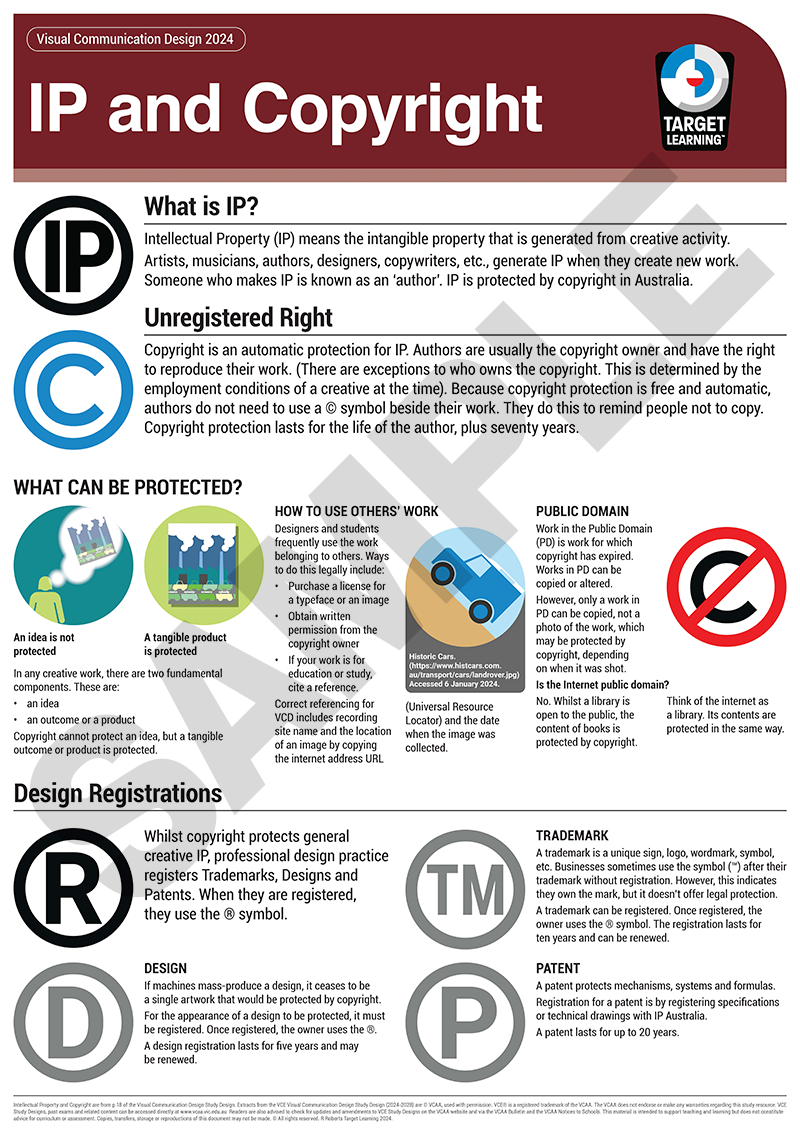
Intellectual Property (IP) means a kind of property that is generated from creative activity by artists, musicians, authors, designers, and copywriters, where the creator (known as an 'author') automatically receives copyright protection for their original work. Beyond copyright, creators can also register their designs through IP Australia for additional protection, including trademarks for logos and brand elements, design rights for mass-produced products, and patents for mechanisms and systems, providing stronger legal protection in commercial contexts.
- Ideas vs. Products
Copyright laws cannot protect an idea, but they do protect the actual outcome or product created from that idea. You must create your original work rather than copying existing designs, even if the same concept inspires you. - Free vs. Protected Content
Just because something is on the internet doesn't mean it's free to use - think of websites like books in a public library, where the content is still protected by copyright. Look for Creative Commons-licensed content or public domain works when you need free-to-use materials, and always check the specific license conditions before using any content. - Proper Attribution and Usage
When using others' work legally, you must either purchase a license, get written permission, or properly reference it for educational purposes. Never reference images as ‘Pintrest’ but instead visit the actual website and record the URL and date accessed. - Design Registrations for Commercial Protection
While copyright is automatic and free, businesses can register their designs through IP Australia for stronger legal protection. Trademarks (™/®) protect logos and brand symbols, design rights protect the appearance of mass-produced products, such as kettles, and patents protect mechanisms and technical innovations. These registrations incur costs but offer more robust legal protection in commercial contexts, with trademarks lasting 10 years (renewable), design rights lasting 5 years (renewable), and patents lasting up to 20 years.
Examples of legal obligations
Messages
- Copyright
- Registered trademark
- Use of style guide
- Types of license (Creative Commons, etc.)
- Licensing (Typeface, photography, artworks, etc.)
- Indigenous Knowledge
Objects
- Copyright
- Design registration
- Patent
- Safety standards
Environments
- Copyright
- Contractual obligations
- Safety standards
- Accessibility and building performance standards
- Council regulations
Interactive experiences
- Copyright
- Licensing (Typeface, photography, artworks, etc.)
- Security and data privacy
- WCAG Accessibility standards
CAUTION
Good to know
CONTENT ADVICE and DISCLAIMER
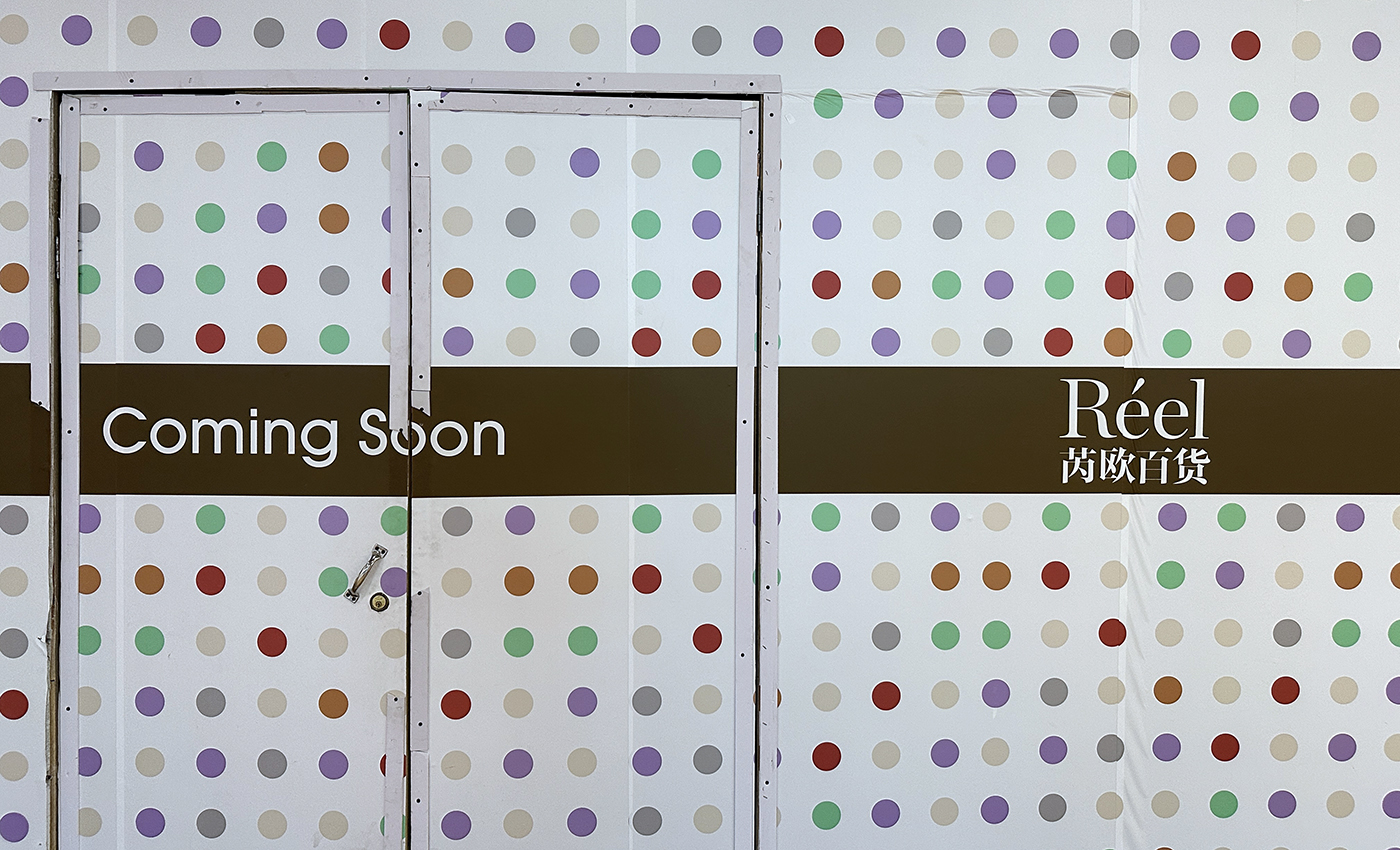
This is what we want to avoid...
BEFORE WE START
IP and copyright are about protecting creative work. The people who work in this field are lawyers. When people are believed to have copied creative work without permission this is known as copyright infringement. Person A has infringed the copyright of person B. However, legal rulings regarding copyright infringement are very dependent on factors such as context, who they involve, the extent or magnitude of the breach and the amount of money at stake. Copyright lawyers sometimes rely on precedent when advising clients about their rights and obligations. However, precedents change and what was determined in one context may not apply in another. Therefore, this simple guide is not actual legal advice. It is intended to inform students about the terms involved in copyright and IP and the sorts of issues that arise around them.
WHAT IS IP?
Jump to
Copyright
Copyright is a free, legal protection for creative work in Australia. This section discusses the purpose and conditions surrounding the idea of copyright.
WHAT IS COPYRIGHT ©?
HOW LONG DOES IT LAST FOR?
Copyright protection lasts for the life of the creator plus an additional seventy years. You and I can reproduce this:

But you can’t reproduce this image. That's because I made it, own the copyright, and am still alive.
Image to describe the concept of process in art making.
WHAT CAN BE PROTECTED BY COPYRIGHT LAWS?
To answer this, we have to separate two important aspects of a creative work that leads to the making of IP. In any creative work, there are two fundamental components. These are;
- an idea
- an outcome or product
Copyright laws cannot protect an idea, but an outcome or product is protected.
WHAT DO YOU MEAN IDEA AND PRODUCT?
If someone has an idea to make a poster about animal welfare, for example, showing sick animals and explaining how to help them, then this is only an idea. (Apart from thinking) there has been no IP generated from this activity. Therefore, anyone else can make a similar poster.
However, if the person with the idea goes on to make the poster, then the design, arrangement of the images and the images themselves are all protected by copyright. This doesn’t mean the idea of the poster is protected. No, anyone can still make another poster about animal welfare that serves the same purpose. But they cannot copy this poster. It is already made.
WHAT SORTS OF THINGS CAN BE PROTECTED BY COPYRIGHT?
Copyright (other registrations covered later) laws can protect many things. These include;
- Wordmarks
- Designs
- Logos
- Colours
- Songs
- Stories
- Typefaces
- Photos
- Websites
- Catchphrases
- Dances
CAN A COLOUR BE PROTECTED?
How on earth can a colour be protected by copyright laws? A colour can be protected but only in the context of a product or outcome. Mattel ® owns the right to use this colour exclusively. But only on packaging for their plastic dolls., You can use it on your designs but you can’t use it on packages for 30 cm plastic fashion dolls.

Barbie Pink. Hex: #E94196.
HOW CAN I USE THE WORK OF OTHERS LEGALLY?
Designers and students are required to use the work belonging to others. But they must do it legally. We frequently use images and typefaces that we didn’t design. So how can we do it properly? Here are three ways to use non-original IP:
- Designers must purchase a typeface or image licence. You may need to know that licences for typefaces are included in most computer operating systems. Accounts like Adobe ® include access to paid license fonts. Stock image sites provide images via a paid license.
- Write to the copyright owner and request written permission to use an asset. Hip-hop musicians who put samples (short recorded bits) of others’ songs in their own songs must get written permission to record and publish new work containing non-original material.
- If your work is for education or study, students can cite a reference when using other's work. Students in VCD do this for their research, but remember, you can’t pass it off as part of your new design.
Referencing research images
Students may collect images for research and analysis. However, they must reference each image to ensure that others’ IPs are not being passed off as the student’s own. Correct referencing for VCD includes recording the location of an image by copying the internet address (URL – Universal Resource Locator) and the date when the image was collected. Students should observe the following rules for referencing;
- Do not reference as ‘Google search’ or the URL of the search
- When students see an image they would like to use, they must;
- press ‘Visit’ on the image and go to the website where the image is located
- collect the image, then copy the URL and record the date the image was accessed
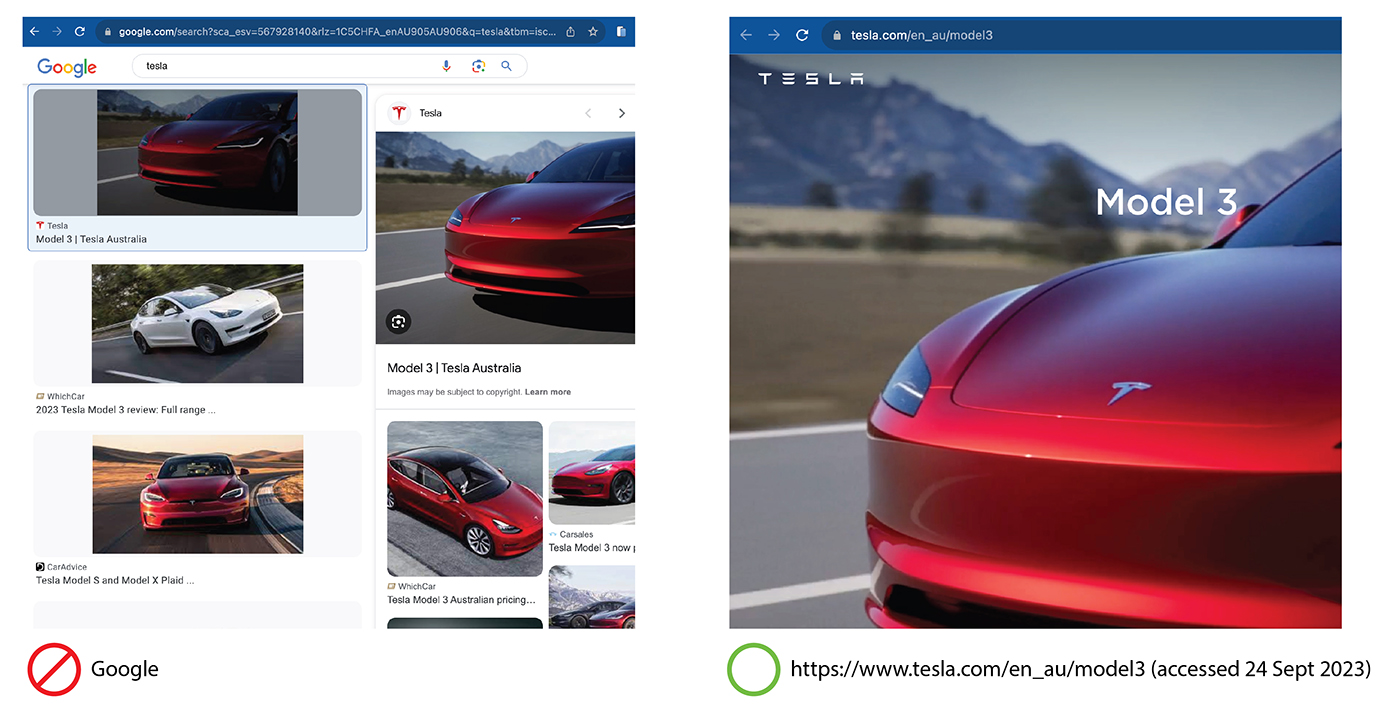
Incorrect (left) and correct (right) ways to reference images in student folios.
Jump to
Common situations involving copyright work
Situation
do
Don't
Create a logo from an image
Students can use pictures from the internet as research and inspiration as long as the sources are cited. Students should really draw or trace photos that are taken by the student. Alternatively, they should find images supported by a Creative Commons license, that allows copying and alteration, and attribute them in folio annotations
Use ‘image trace’ in Illustrator to create vector shapes from pictures found on the internet. The use of pictures may be a copyright infringement
Create a visual with material textures
They should use pictures from the internet as research and inspiration as long as the sources are cited. Then they should take their own photos of textures or backgrounds. Alternatively, find images supported by a Creative Commons license, that allows copying and alteration, and attribute them in folio work
The student grabs an image from the internet and places it into Photoshop as background. The use of these pictures may be a copyright infringement
Use of images from image libraries such as ‘Shutterstock’
Low-resolution images may be used as ‘place-holders’ to develop page layouts if the correct attributions are given in the folio annotations. Once a design progresses to refinement and mock-up, either a student taken shot or purchased image with accompanying license attributions may only be used
Student places low-resolution images from the internet in a design solution. The use of pictures may be a copyright infringement
Download and use of ‘free’ font
Typefaces are provided with restrictions regarding their use. Often, ‘free’ typefaces found on typeface sites like dafont.com are free for non-commercial use. Students may use fonts when they observe the license conditions attached. These are often in a ‘read-me’ file downloaded with the font
A student uses a free font for a final presentation may be prohibited
Use actual logos, trademarks or designs
Students should only use designs as research and inspiration, as long as the sources are cited. They may not be used in final presentations unless written copyright permission has been obtained
A student uses an actual logo, trademark, design or building in their work. This is most certainly a copyright infringement
Logo or design template websites
The student has not had creative and technical design control over the making of the image. Students should mock-up designs in context on background images shot by the student
The student creates a logo in context in an image from a template or mock-up website
Jump to
Public domain & Creative Commons
There are some works that are free for the public to use. Others carry a new kind of license that allows them to be used with the owner retaining the moral rights to attribution. Let's explore these briefly.
WHAT IS THE PUBLIC DOMAIN?
Creative work in the public domain means creative work for which the copyright has expired. Most old paintings are in the public domain. But be careful here. The painting is in PD, but if you wish to use the Mona Lisa in a poster, you would need to take the picture of her yourself because an image of her taken by someone else is not in the public domain unless 70 years have passed since the photographer’s death. Creative works in the public domain are free of copyright restrictions. They can be copied.
Oh, and by the way, there are restrictions about even taking photos of paintings that are out of copyright in museums. When visitors buy tickets for admission, they are sold subject to terms and conditions. These usually include permission for visitors to shoot pictures only for personal or educational use.
ARE WORKS ON THE INTERNET IN THE PUBLIC DOMAIN?
No.
Think of the internet as a library. The library is open to the public. It is open to everyone in the world. But you know that the image is protected by copyright when you find a picture in a book.
So, think of websites as books. They are in a library called the Internet. Creatives write and illustrate websites. Their words and images are protected by copyright - even though everyone with a computer can see them. Websites and their contents, which is where images you find in a web search live, are protected by copyright in the same way as physical IP in a book.
WHAT IS CREATIVE COMMONS?
When one makes a creative work, it is protected by copyright.
However, some people want to share their work for use by others. If they place their work in the Public Domain they would relinquish (lose) their copyright. They don’t want to do that.
An organisation called creativecommons.org has created a licensing system where people can allow their IP to be shared and sometimes re-mixed without the copyright owner losing copyright.
A copyright owner uses creativecommons.org to build a CC licence into their IP. A defining difference regarding license types is if the owner wishes to release their IP for non-commercial or commercial work.
Generally, people grant CC licenses for non-commercial use. Can you guess why? All CC licenses require users to credit the original creator with an attribution. You will learn that attribution is a moral right next. They also require that future use or re-mixing of the work is posted with attributions back to the original owner.
Jump to
Moral rights
Moral rights regard the correct ways to use copyrighted work. There are several legal rights provided to creatives when their work is made.
THREE RIGHTS
Apart from protection for copyright owners, creatives also have moral rights regarding the subsequent use of their IP. There are three moral rights. These are;
- The right of attribution
- The right against false attribution
- The right to the integrity of the work including;
- The right for the work not to be altered
- The right for the work not to be shown in a derogatory context.
Let’s unpack these..
The right of attribution
This means that an author must be credited with their name to show that they made the design. (There are exceptions to this. This is determined by the employment conditions of a creative at the time).
The right against false attribution|
This means that no one else can claim to have done someone else’s work and pass it off as their own.
The right to integrity of the work
The right to the integrity of the work including;
- The right for the work not to be altered
- The right for the work not to be shown in a derogatory context.
For example, if a designer uses a logo in a poster they must not change its shape or colours or any other things about it. (Logos and corporate branding imagery are usually controlled by strict guidelines called a style guide).
This right also means if someone buys a painting or sculpture and puts it in their house they are not permitted to cut it in half if it is too big to fit on the wall.
In addition, if a designer uses an image in a poster, they cannot use it in a derogatory way. It must be shown in a positive light.
Jump to
Design registrations
THREE KINDS OF REGISTRATION
There are three kinds of official registrations for IP. These are;
- Trademarks
- Design Rights
- Patent
Applications for registration of designs is made through IP Australia.
TRADEMARKS
A trademark is a unique sign, logo, wordmark, symbol, etc. A person may use the symbol (™) after their trade mark without registration. This indicates that they want exclusive use of their IP, but it isn’t legally binding.
A trademark can be registered in Australia. This means it has gone through a process of checking to ensure it is unique (not used by anyone else) and placed in a government register with IP Australia. A fee is charged. Once registered, the owner can use the ® symbol to indicate that it is registered and protected. The registration lasts for ten years and can be renewed.
Trademarks and registered trademarks ® are usually for communication designs. Find out all the details at Trademarks, IP Australia.
DESIGNS Rights
If a design, such as an industrial design product like a kettle, is mass-produced in a factory by machines, it ceases to be a single artwork that would receive protection by copyright. The way for the appearance of a commercial or mass-produced product to be protected is by registration of the design.
For a design to be protected, it must be registered before it is shown or released to the public. Like trademark registration, registration of a design is done through IP Australia and costs money. A design registration lasts for five years and may be renewed.
Registered designs ® are usually for industrial designs. Find all the details at What a Design Right is, IP Australia.
PATENT
A patent protects mechanisms, systems and formulas. Industrial technologies and working parts of machines and devices can be patented. Newly invented chemicals, how a camera lens attaches to a camera, or a scroll wheel in a mouse are examples of things a patent registration can protect.
Registration for a patent is done by registering specifications or technical drawings with IP Australia and paying a fee. A patent lasts for up to 20 years. Patents usually concern industrial design. However, as VCD students are not required to make working prototypes, it has less relevance for our study.
Find out all the details at Patents, IP Australia.
COPYRIGHT PROTECTION FOR ENVIRONMENTAL DESIGN
Naturally, building designs made by architects are protected by copyright. However, an architect-designed building is considered unique and designed for one specific site. The right to copy (and therefore reproduce on the same building on a different site) a building is not transferred to the client even though they paid the architect for the plans.
By contrast, if an architect works for a government building contract, the IP is transferred to the government. The client may reproduce the same building on any other site.
task
Show I know ...
1.1 Understand IP and Copyright
Read this page and consider the knowledge you have learnt. Use the 'I used to think but now I know' thinking routine. Write down;
- Three things I already thought about IP, Copyright or design registrations
- Three things I have learnt from this page
Share your answers with the rest of the class.
1.2 illustrated wall chart
Make an illustrated wall chart to hang in your study or classroom. In your chart or mind map explain the following concepts;
- IP
- Copyright
- How to reference images correctly
- Dos and Don’ts for Copyright
- Public domain
- Moral rights
- Design registrations for;
- Messages and Interactive experiences
- Objects
- Environments
- Patents